

Why Tight Packaging Matters for Tissue Culture Plants During Shipping

Tissue culture plants are young plantlets grown inside sterile bottles or sealed containers. Inside each vessel, the plantlets are supported by agar medium, high humidity, and a carefully controlled environment. Although they may look healthy inside the bottle, their leaves, shoots, and roots are still far more delicate than plants that have already been acclimatized outside the vessel. They have not yet been exposed to vibration, outdoor air, natural light, or temperature changes in the same way as regular plants. For this reason, shipping is a critical stage that requires special care.

Packing tissue culture plants tightly does not mean forcing too many bottles into a box or compressing the package excessively. It means arranging the bottles so they remain stable, upright, and unable to move around during transport. In real shipping conditions, parcels may be lifted, stacked, tilted, shaken, dropped, or exposed to repeated impact. If the bottles inside the box have space to roll or shift, the plantlets, agar medium, and containers will experience repeated mechanical stress throughout the journey. This can damage the plantlets even if the outer box still appears normal on arrival.
One of the most common problems caused by loose packing is broken, softened, or displaced agar. The agar medium is not only a source of nutrients for the plantlets; it also helps support them in the correct position inside the bottle. If the bottle is tilted or shaken excessively, the agar may detach from the base, slide toward the cap, coat the leaves, or press against young shoots. This can restrict the plantlet, cause bruising, lead to shoot blackening, or contribute to rot later. For example, a bottle may arrive without any cracks, but if agar is covering the shoot tips, the plantlets may stop growing or begin to deteriorate within a few days after delivery.
Another important reason for firm packaging is to reduce impact on young leaves, shoots, and roots. Tissue culture plantlets have very soft structures. Their roots are small, their leaves are thin, and their shoots are fragile. When the bottle moves during shipping, the plantlets may rub repeatedly against the bottle wall, cap, or agar medium. This can create small injuries that are not always visible immediately. Later, the plant may show yellowing leaves, bruised shoots, broken roots, or blackened growing points. Keeping the bottles fixed in place helps reduce accumulated impact and allows the plantlets to reach the customer in better condition.
Tight and stable packing also reduces the risk of bottles hitting each other, cracking, breaking, or becoming loose at the cap. Tissue culture plants must remain in a sterile system. If glass bottles collide repeatedly during transport, small cracks may form or the cap may loosen without being noticed. Once sterility is compromised, fungi and bacteria from outside can enter the bottle. Because the agar medium contains sugar and nutrients, contamination can spread quickly, causing the bottle to become infected and the plantlets to rot.
From the customer’s point of view, it is easy to assume that the shipment is fine as long as the bottles are not broken. However, with tissue culture plants, damage is not measured only by broken glass. The plantlets inside may already have experienced stress or mechanical injury during transport. The symptoms may appear later, such as yellowing leaves, blackened shoots, rotting roots, or contamination inside the bottle. Proper tight packing helps reduce hidden damage that may not be visible on the first day but can affect plant quality afterward.
The correct packing principle is to keep each bottle as upright as possible. There should be cushioning material between every bottle so glass does not touch glass directly. The bottom, sides, and top of the box should be supported, and empty spaces should be filled properly so that the bottles do not move when the box is gently shaken. A strong outer box is also important because parcels may be stacked or pressed from above during shipping. If the box is too weak, external pressure can transfer directly to the bottles and cause damage.
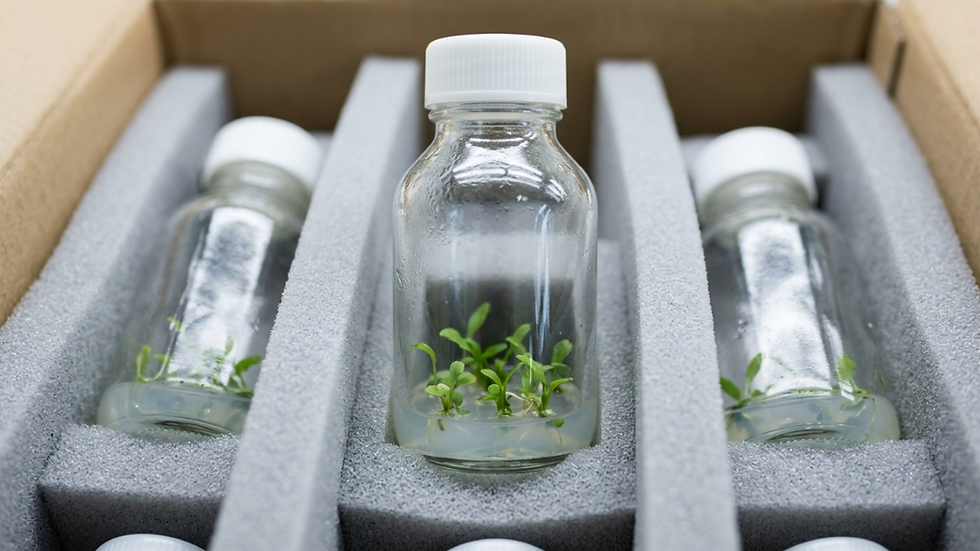
However, tight packing must be balanced. It should be firm enough to hold the bottles in place, but not so tight that the bottles are compressed or the box becomes swollen. Excessive pressure can crack bottles, deform caps, or weaken the box structure. Good packaging should use suitable cushioning materials such as bottle dividers, protective paper, foam, or other supportive materials that lock each bottle in position without squeezing it directly.
For long-distance shipping or export, packing stability is only one part of the process. Time and temperature during transit are also important. Tissue culture plantlets do not tolerate extreme heat, extreme cold, or prolonged delays well. If a package is left in a hot location or remains in transit for too long, the plantlets may weaken even though they are still inside the bottle. Therefore, shipping plans should consider packaging, route, transit time, temperature exposure, and impact reduction together.
In summary, tight packaging helps reduce shipping damage in tissue culture plants by keeping bottles stable, reducing agar movement, minimizing friction and impact on plantlets, lowering the risk of broken roots and bruised shoots, preventing bottle cracks or loose caps, and reducing the chance of contamination. Good packaging is not just about getting the product to the destination. It is about preserving the quality of the tissue culture plantlets so they remain ready to grow after the customer receives them.
✨ channel for ordering ✨
Facebook Fanpage : ไทยทิชชู – ต้นไม้เพาะเนื้อเยื่อ ( Inbox 📩)
TikTok Shop : https://www.tiktok.com/@thaitissueshop
Shopee : https://shopee.co.th/thaitissue
🌱Other Contacts🌱
☎️ : 06-4475-7495 , 08-8629-4513
Line OA : https://lin.ee/UQFnpoN
Website : https://www.thaitissues.com/


Comments