

Plants Have "Secret Scents": How 'VOCs' Act as Invisible Healers for Your Home
- ศรุตา แนบกลาง
- Dec 14, 2025
- 3 min read

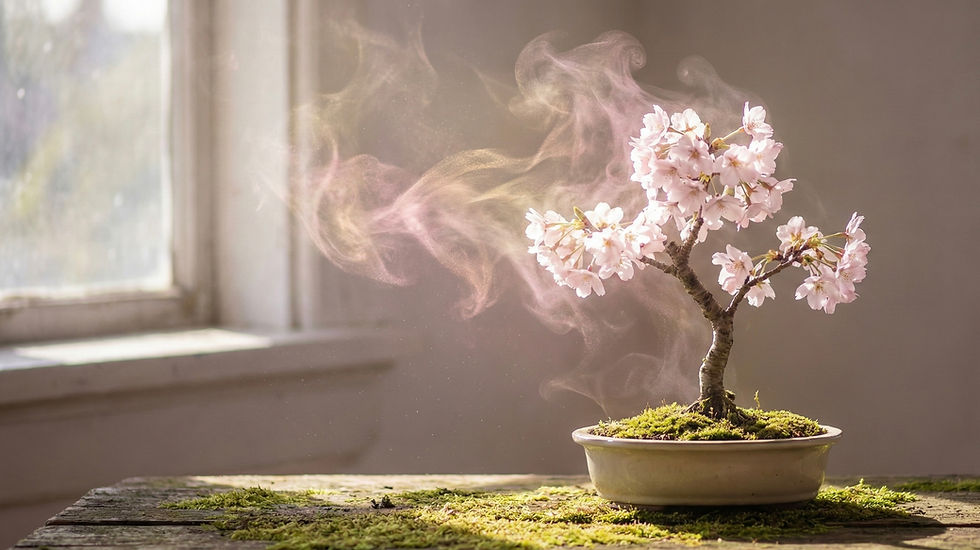
Have you ever wondered why walking into a forest, a park, or even a small green corner in your home makes you feel immediately "relaxed"?
It goes beyond just seeing the soothing green color or getting a breath of fresh oxygen.
Scientifically speaking, there is an "Invisible Variable" hidden at play.
Every plant—whether in a vast forest or inside a tissue culture jar—is constantly communicating and releasing energy in the form of chemical molecules. This is their "Signature Scent." While our noses might not explicitly detect it, our bodies and brains perceive and respond to it instantly.
Today, Thai Tissue will guide you through this biological mechanism to reveal how plants truly heal us and why choosing "healthy" plants is crucial for this process.
1. Getting to Know VOCs: The Secret Language of Plants
The "scent" we are talking about is chemically known as...
"VOCs" (Volatile Organic Compounds)
In the plant world, VOCs are a group of natural compounds that plants synthesize and release through their stomata, stems, or flowers. They float in the air around us, often at levels too subtle for our noses to consciously detect. Plants use them as essential survival tools—acting like "Nature’s Wi-Fi" to transmit signals to one another.
To put it simply: if a fingerprint is a human's unique identity, then VOCs are the "Scent Signature" of each specific plant.
Every species releases a different "formula" of VOCs in unique proportions.
Why Do Plants Release VOCs?
The scents released by plants aren't originally meant for humans; they are actually the "language" of the plant world.
1. For Communication (Plant Communication): When a plant is being attacked by insects, it releases VOCs to transmit a warning signal (SOS) to neighboring plants, alerting them to prepare and produce their own self-defense compounds.
2. For Protection (Defense Mechanism): Certain scents are created to repel pests, or conversely, to attract beneficial insects to help eliminate the attackers.

2. Humans and Our Reaction to "Scent"
Sometimes, when you approach different plants, you may notice distinct shifts in how you feel:
Standing near one might make you feel calm.
Another might bring a wave of freshness.
While some might make you feel invigorated.
Multiple research studies support the Japanese concept of Shinrin-yoku (Forest Bathing), discovering that volatile plant compounds known as Phytoncides directly affect human physiology:
Lower Cortisol Levels: Stress hormones decrease significantly.
Balance the Nervous System: Helps slow down the heart rate and stabilizes its rhythm.
Alpha Waves: Stimulates Alpha brain waves, inducing a state of calmness, focus, and relaxation.
Examples of VOCs Released by Plants:
🌲 α-pinene (Found in conifers/pine family): Promotes a sense of freshness, clears the airways, and induces relaxation.
🌿 Linalool (Found in lavender and herbs): Possesses properties that help reduce anxiety (Anxiolytic effect).
🌳 Green Leaf Volatiles (GLVs): The crisp, green scent of leaves that triggers feelings of "vitality" and alertness.
Therefore, the well-being you feel isn't just "imagination"—it is a genuine "biological response."
Indoor Plants as Your Personal 'Therapists'
For home lovers who grow air-purifying plants—whether they are Snake Plants, Peace Lilies, Philodendrons, or Ferns—you are effectively creating a "Micro-climate."
This is a simulated environment where these beneficial volatile compounds permeate the air.
But here is the most interesting point...
“The Quality of the Plant = The Quality of the Substances Released”
Plants release their beneficial VOCs (those "Good Vibes") most effectively only when the plant itself is "Healthy and Strong."
If a plant is weak, sick, or infected, it switches modes to release "Stress Volatiles" in a desperate bid to survive instead.
📝 Tips: Turning Your Home into a Plant Therapy Zone
To fully reap the benefits of these natural VOCs, try applying these simple techniques:
Choose Foliage Plants: Even without flowers, leafy plants like Monstera or Philodendron release Green Leaf Volatiles that are excellent for boosting freshness and vitality.
Air Circulation: VOCs need movement. Place your plants in a well-ventilated area (but avoid direct drafts from the air conditioner) to help the beneficial scents disperse throughout the room.
Cleanliness is Key: Regularly wipe the leaves clean. Dust clogging the stomata (pores) blocks the release of these therapeutic compounds and hinders oxygen production.

At Thai Tissue Culture International, we don’t just sell plants; we deliver the "Perfect Beginning" for your space.
We provide robust, disease-free tissue culture plants that are ready to thrive and create a relaxing atmosphere for you every single day.
If you are looking for "Lab-Grade Quality" greenery to transform your home into a therapeutic sanctuary, please feel free to browse our collection or consult with us via the channels below.
🌱Other Contacts🌱
☎️ : 06-4475-7495 , 08-8629-4513
Line OA : https://lin.ee/UQFnpoN
Website : https://www.thaitissues.com/
...
✨Channel For Ordering✨
Facebook Fanpage : ไทยทิชชู – ต้นไม้เพาะเนื้อเยื่อ ( Inbox 📩)
TikTok Shop : https://www.tiktok.com/@thaitissueshop
Shopee : https://shopee.co.th/thaitissue


Comments