

Philodendron tortum: The Sculptural Philodendron That Stands Out Through Form, Not Color
- นภสร ตาปะสี
- May 27
- 3 min read

Philodendron tortum is one of the rare foliage plants that people tend to remember after seeing it only once. Its impact does not come from variegation or intense color, but from a leaf shape that feels completely different from the usual philodendron image. The leaves are cut into long, narrow, deeply divided segments that feel light, open, and slightly twisted, leading many people to compare them to fishbones, palm fronds, or even the skeletal outline of a leaf. It is a plant that proves a striking foliage plant does not need color to stand out. Structure alone can be enough.

Botanically, Philodendron tortum is a formally accepted species, not just a nursery label. It was published in 2001 and is native from northern Brazil to Bolivia in humid tropical regions. That detail gives the plant a much deeper identity than that of an ordinary collector plant. It is not simply a fashionable form in the market, but a real rainforest species that only entered modern scientific description relatively recently.
Its natural growth habit helps explain why it looks the way it does. Tortum is a climbing plant with aerial roots, described botanically as a root-climbing hemiepiphytic liana. In practical terms, that means part of its life depends on using surrounding structures to climb toward better light. This is why it usually looks better in cultivation when given a moss pole, a support stake, or some kind of vertical surface. Without support, it may still grow, but it often loses some of the elegance that makes it so distinctive.
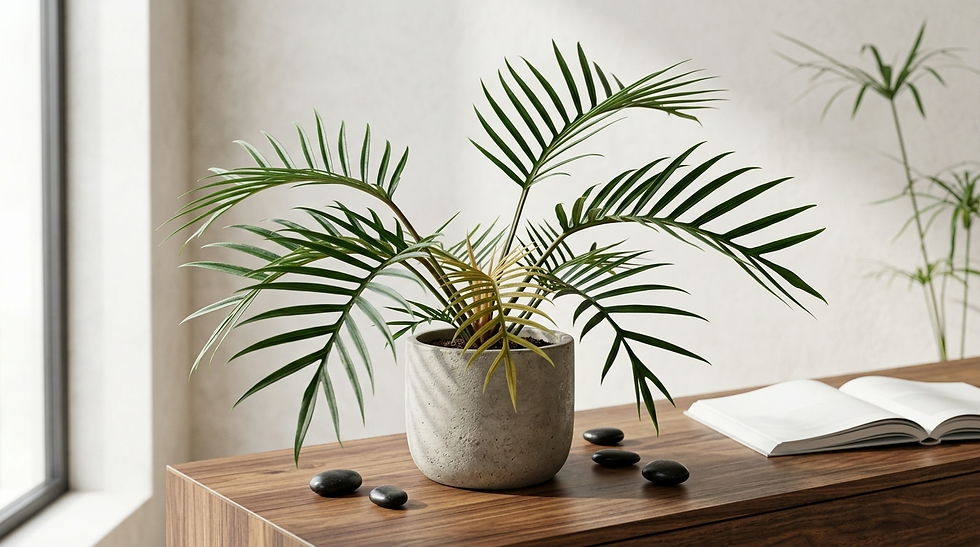
The leaves are, of course, its defining feature. Each blade is so deeply divided that it comes close to the central vein, with long, narrow segments separated by open space. The result feels more like a sculptural design than a conventional tropical leaf. In interior styling, this is especially valuable. Tortum does not just add greenery; it adds silhouette, movement, and shadow. Positioned near a wall or a bright window, it can create patterns of light and shape that make it feel almost architectural.
Even its name adds to the charm. The word tortum comes from Latin roots connected to twisting or curving, which suits the plant beautifully. Its leaves are not stiff or perfectly symmetrical. They have just enough natural twist and looseness to feel alive. In this case, the scientific name is not only descriptive, but almost poetic.
It also has value in the collector world because it helps people learn the difference between several kinds of lobed philodendrons. Tortum is sometimes confused with plants in the pedatum group, but its form is usually more elongated, more airy, and more rhythmically structured. Where some related plants feel broader or more hand-shaped, tortum feels leaner and more refined.
In care, it responds best to conditions that resemble a bright, humid rainforest edge. It likes strong filtered light, airy substrate, and moisture without stagnation. A good aroid mix with bark, coarse organic material, and plenty of drainage usually suits it much better than dense soil. Like many climbing tropical plants, it prefers oxygen around the roots and enough support to express its natural habit.
Its story is also beginning to shift in the market. Once considered mainly a rare collector species, tortum is increasingly appearing through more modern propagation channels, including tissue-cultured stock. While highly specific academic protocols are still not as widely published for this exact species as for some others, the broader philodendron group already shows strong micropropagation potential. That means tortum is likely to become more commercially accessible over time without losing the special form that made it desirable in the first place.
Ultimately, Philodendron tortum is one of the best examples of a plant that wins through design rather than color. It does not need variegation or dramatic pigment to be memorable. Its power lies entirely in the shape of the leaf. And for anyone who loves plants that feel closer to living sculpture than ordinary greenery, tortum is a near-perfect example of how strong natural form can be.
✨ channel for ordering ✨
Facebook Fanpage : ไทยทิชชู – ต้นไม้เพาะเนื้อเยื่อ ( Inbox 📩)
TikTok Shop : https://www.tiktok.com/@thaitissueshop
Shopee : https://shopee.co.th/thaitissue
🌱Other Contacts🌱
☎️ : 06-4475-7495 , 08-8629-4513
Line OA : https://lin.ee/UQFnpoN
Website : https://www.thaitissues.com/


Comments