

Importation of Plant Tissue Culture into Thailand
- นภสร ตาปะสี
- 23 hours ago
- 3 min read

The importation of Plant Tissue Culture is a vital process for the development and propagation of plants for commercial and agricultural research purposes. Imported plant tissues are typically used as starting materials for cultivation under sterile conditions to ensure that the resulting plantlets possess identical genetic characteristics to the mother plant, maintain consistency, and remain disease-free. The importation process must strictly adhere to Thailand’s regulations and laws to prevent the spread of foreign plant pests and diseases.
In Thailand, the supervision of plant and plant material imports is under the responsibility of the Department of Agriculture (DOA), under the Ministry of Agriculture and Cooperatives. Clear procedures and documentation requirements have been established for importation. Consequently, private sector entities operating in the plant tissue culture business, such as Thai Tissue Culture International Co., Ltd., are required to strictly follow these regulations.


Essential Documents for Importing Plant Tissue Culture
Importing plant tissue culture requires key supporting documents to verify the origin, safety, and authenticity of the plant material. The primary documents used for importation include:
Importing plant tissue culture requires key supporting documents to verify the origin, safety, and authenticity of the plant material. The primary documents used for importation include:
1.Import Permit
This is a document that the importer must apply for from the Department of Agriculture before proceeding with the import. It must specify details regarding the plant species, quantity, country of origin, and the purpose of import. This document serves as primary evidence that the importation is being conducted legally according to Thai law.
2.Phytosanitary Certificate
An official document issued by the plant quarantine authority of the exporting country to certify that the plant materials are free from pests, plant diseases, or contaminants that could harm the importing country's agricultural system.
3.Commercial Invoice
A commercial document issued by the exporter specifying product details such as type, quantity, price, and total value of the goods, as well as information about the exporter and importer. This document is used for inspection and customs clearance procedures.
4.Packing List
A document showing details regarding the packaging of the goods, such as the number of containers or culture flasks, the method of packing, and the number of units, to allow officials to inspect the goods accurately and conveniently.
5.Transport Documents
Such as the Air Waybill (AWB) for air freight, which is issued by the airline or transport company to serve as evidence of shipment and provide information regarding the transport route.
6.Certificate of Origin or Variety Certificate
This document is used to verify the origin of the plants or the authenticity of the imported variety, which is crucial for quality control and traceability of the plant material.
7.Plant Quarantine Inspection Document
When the plant tissue culture arrives in Thailand, it must undergo inspection by Plant Quarantine officials from the Department of Agriculture to ensure the plants are free of pests or contaminants. Once cleared, the goods can be imported and utilized for cultivation.

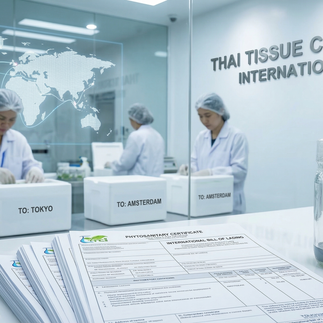
Summary of the Importation Process
Apply for an Import Permit from the Department of Agriculture.
The exporter prepares the plant tissue and the Phytosanitary Certificate.
Ship the goods via air freight to Thailand.
Undergo inspection at the Plant Quarantine Station.
Receive the goods and proceed with cultivation in the laboratory.
Examples of Plants Commonly Shipped as Tissue Culture
Many plant species are popularly shipped in tissue culture form due to the convenience of transport and the reduced risk of spreading plant diseases. Examples include:
Bananas
Orchids
Various Ornamental Plants


The importation of plant tissue culture must be carried out in strict accordance with the law and plant quarantine measures. All supporting documents must be fully prepared to ensure that the imported plant material is free from pest or disease contamination. This supports the development of the nation's agricultural sector and plant industry, ensuring safety and sustainability for the future.
✨ช่องทางการสั่งซื้อ✨
Facebook Fanpage : ไทยทิชชู – ต้นไม้เพาะเนื้อเยื่อ ( Inbox 📩)
TikTok Shop : https://www.tiktok.com/@thaitissueshop
Shopee : https://shopee.co.th/thaitissue
🌱Other Contacts🌱
☎️ : 06-4475-7495 , 08-8629-4513
Line OA : https://lin.ee/UQFnpoN
Website : https://www.thaitissues.com/


Comments